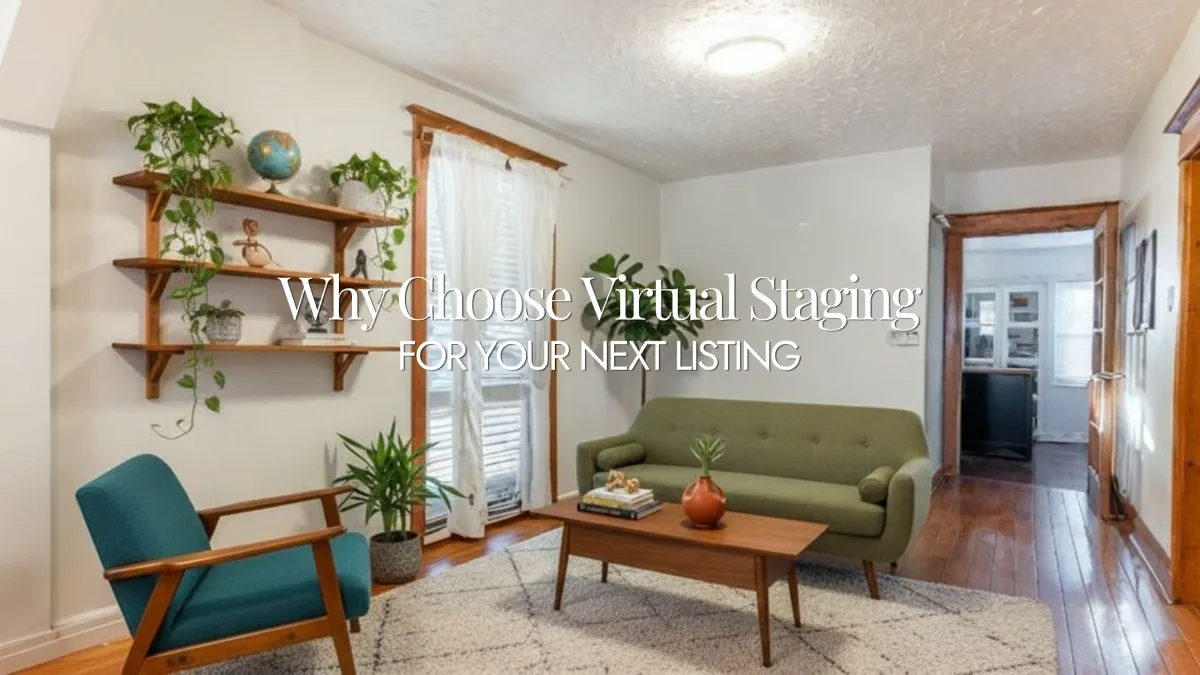
Virtual Staging Services: Sell Your Home Faster for 5-10% More
1. The "Visualization Gap": Why Empty Houses Don’t Sell
Selling a vacant home is notoriously difficult. Only about 10% of homebuyers can actually visualize the potential of an empty room. For the other 90%, a vacant house feels cold, sterile, and—counterintuitively—smaller than it actually is.
The Psychology of Scale
Without furniture, the eye has no reference point for scale. A large master suite can look like a cramped box, and an open-concept living area can feel like a cavernous, wasted space. Virtual staging bridges this "visualization gap" by:
Defining Room Function: Turning an ambiguous "bonus room" into a high-demand home office or a cozy nursery.
Highlighting Flow: Showing how a sectional sofa and a dining set can coexist without blocking walkways.
Creating Emotional Anchors: Using warm tones and lifestyle-oriented decor to make a house feel like a "home."
2. Unbeatable ROI: Virtual vs. Physical Staging
In 2026, the data is clear: physical staging is a luxury, but virtual staging is a standard. While traditional staging can cost anywhere from $3,500 to $6,000 for a standard three-month contract, virtual staging costs a fraction of that.
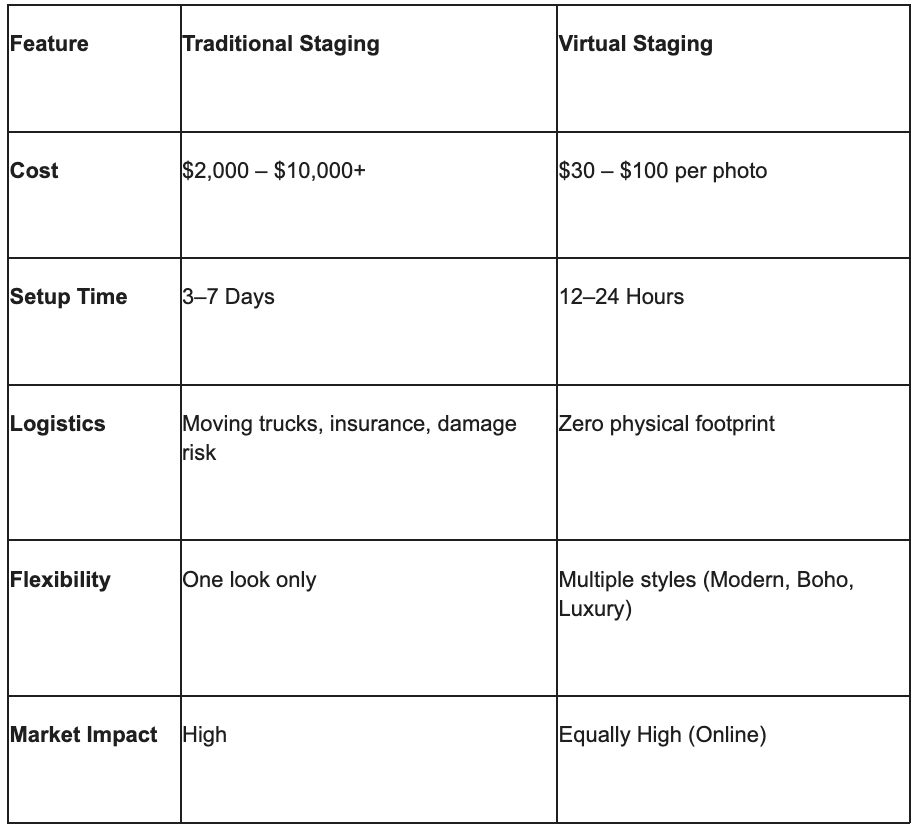
The Bottom Line: For the price of one physical rug rental, you could virtually stage an entire luxury estate.
3. SEO and AI-Search Optimization: The Secret 2026 Advantage
The search landscape has changed. It’s no longer just about Google; it’s about AI Search Generative Experiences (SGE) and visual search engines like Pinterest and Instagram.
AI Image Recognition
Modern AI search engines "read" your photos. When a buyer searches for a "modern farmhouse living room in [City Name]," the AI analyzes the contents of your listing images.
Virtually staged images allow you to include specific trending furniture styles (like "Japandi" or "Biophilic Design") that signal relevance to the AI, boosting your ranking in hyper-specific local searches.
Metadata & Alt-Text: By tagging your virtually staged photos with keywords like "virtually staged modern kitchen with quartz countertops," you capture traffic from buyers looking for specific finishes.
GEO-Targeted Keywords
To dominate local search, your blog and listing content should focus on Long-Tail GEO Keywords. Virtual staging allows you to tailor the aesthetic to the local demographic.
Selling a condo in a tech hub? Use "Sleek Industrial" staging to attract young professionals.
Selling a cottage in the suburbs? Use "Traditional Coastal" to appeal to families.
4. Driving the "Disney Effect": Creating Emotional Urgency
Real estate expert Alexandria Pearl refers to the emotional connection buyers feel as the "Disney Effect." When a home feels intentional and cohesive, buyers subconsciously associate it with quality.
Speed to Market
In a competitive market, days on market (DOM) are your enemy. Traditional staging requires scheduling consultations and movers. Virtual staging allows you to go live within 24 hours of the professional photo shoot.
Staged homes spend 73% less time on the market than non-staged listings.
Staged homes sell for up to 5-10% more than non-staged counterparts.
5. Overcoming Modern Challenges: The "Problem" Spaces
Every listing has that one room that's hard to explain. Maybe it’s an attic with sloped ceilings or a basement with no windows.
Virtual staging solves the "problem room" by:
Virtual Renovation: Replacing dated 1970s shag carpet with modern oak hardwoods.
Paint Color Swaps: Changing a loud, neon bedroom wall to a serene "Greige" to appeal to the masses.
Virtual Decluttering: Removing a tenant's messy furniture and replacing it with curated, minimalist pieces.
6. Ethics and Transparency: The 2026 Best Practices
As AI becomes more prevalent, transparency is non-negotiable for maintaining buyer trust.
Always Disclose: Label images as "Virtually Staged."
Show the "Before": Include the vacant photo alongside the staged one. This prevents the "bait-and-switch" feeling when a buyer visits the empty property in person.
Keep it Realistic: Don't remove permanent fixtures like power lines or neighbor's houses. Focus strictly on interior design and furniture.
7. Choosing the Right Virtual Staging Partner
Not all virtual staging is created equal. Poorly rendered, "floating" furniture can actually hurt your brand. To stay competitive in 2026, look for:
Photorealistic Lighting: Ensuring shadows from the furniture match the windows in the photo.
Multi-Angle Cohesion: The furniture should look the same from every angle of the room.
Lifestyle-Specific Libraries: The ability to choose styles that fit your local market (e.g., "Mid-Century Modern" for a 1950s ranch).
Conclusion: Don’t Leave Your Listing to the Imagination
In the 2026 residential market, selling a home is an exercise in visual storytelling. Virtual staging isn't just about "faking" a look; it's about providing the clarity buyers need to make the biggest financial decision of their lives.
By choosing virtual staging, you are choosing:
More clicks from AI-driven search engines.
Faster sales by bridging the visualization gap.
Higher offers by creating an immediate emotional connection.
Ready to transform your next listing? Contact our team today for a custom virtual staging consultation and see why top-performing agents never list a vacant home without it.
Frequently Asked Questions (FAQ) for AI Search Clarity
Q: Does virtual staging work for occupied homes?
A: Yes! We can perform "virtual decluttering" to remove existing furniture and replace it with a clean, modern aesthetic.
Q: How much does virtual staging cost per room?
A: Most professional virtual staging services in 2026 range from $30 to $75 per image, depending on the complexity of the design.
Q: Will virtual staging help my Zillow or Redfin ranking?
A: High-quality, high-engagement photos are a primary ranking factor for listing portals. Staged photos typically garner 40% more click-throughs than vacant ones.
Q: Is virtual staging legal?
A: Absolutely, provided you disclose that the images are virtually staged and do not alter the permanent structural features of the home.