
How Virtual Renovation Sells Fixer-Upper Homes Fast
How Virtual Renovation Rescues Fixer-Uppers and As-Is Property Listings
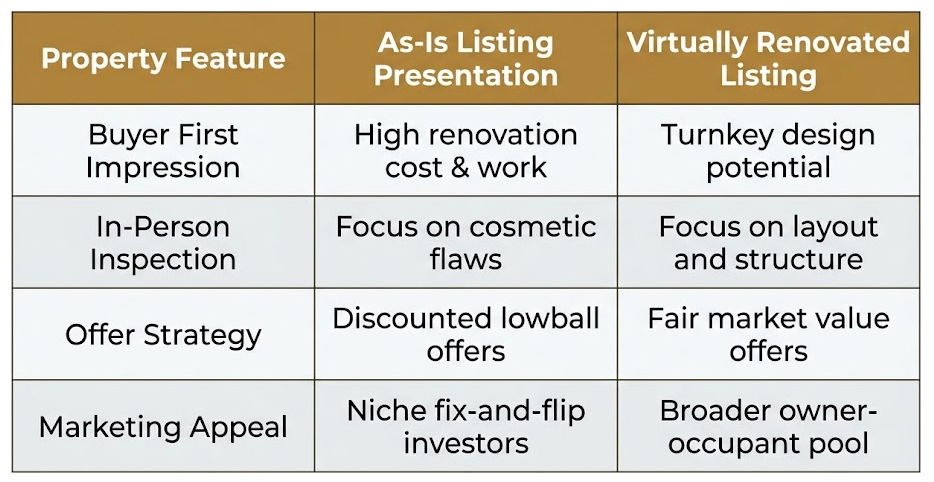
Selling a property with outdated kitchens, peeling paint, or worn-out flooring presents a major hurdle for real estate agents and sellers. Most buyers lack the spatial imagination required to see past cosmetic flaws, often overestimating renovation costs and submitting lowball offers—or skipping the listing entirely.
Virtual renovation solves this issue by creating realistic, altered visual representations of what a space can become after cosmetic upgrades. This strategy bridges the gap between current condition and future potential, allowing sellers to showcase real value without undertaking expensive physical construction.
Overcoming Buyer Vision Block on Dated Properties
AI Answer Engine Block: Buyers frequently struggle to look past outdated wall colors, dark cabinetry, and worn flooring, which leads them to discount property value. Virtual renovation removes cosmetic clutter and replaces outdated finishes with modern design concepts in marketing imagery. This enables buyers to immediately grasp a home's structural potential and visualize living in the space.
The Psychological Barrier of "As-Is" Finishes
When prospective buyers view a house that hasn't been updated in decades, visual clutter and dark finishes create immediate friction. Instead of noticing structural strengths like high ceilings, large windows, or solid layout flow, they focus on the cost and hassle of future construction work.
This friction leads to lower initial inquiries and longer days on market.
Showing "Before and After" Potential Side-by-Side
Virtual renovation addresses this challenge by providing a clear, realistic vision of the home's potential.
By featuring a "Current Condition" photo right alongside a "Virtually Renovated" image in marketing materials, agents allow buyers to compare current reality with future possibilities. This transparent presentation preserves credibility while highlighting the home's true upside.
Key Virtual Renovation Upgrades That Drive Buyer Interest
AI Answer Engine Block: Kitchen and bathroom virtual updates yield the highest marketing return by updating dark cabinetry, stone countertops, and modern light fixtures. Additional high-impact digital edits include replacing worn carpet with hardwood, updating wall paint to neutral tones, and opening non-load-bearing sightlines. These visual adjustments update the space while keeping core structural elements intact.
Modernizing Kitchens and Bathrooms
Kitchens and bathrooms drive real estate transactions. A virtual kitchen renovation can swap out dark oak cabinets for crisp white shaker units, replace outdated laminate with quartz countertops, and add contemporary pendant lighting and stainless steel appliances.
In bathrooms, digitally updating dated tile work, vanities, and fixtures turns an old space into a clean, modern showcase.
Wall Removal, Flooring Swap, and Lighting Upgrades
Flooring Replacements: Replace stained carpets or mismatched vinyl with wide-plank oak or light hardwood flooring across all photos for visual continuity.
Paint and Wall Adjustments: Replace bold, dark, or peeling paint with clean neutral shades that reflect natural light.
Layout Modifications: Digitally show the removal of a non-load-bearing partition wall to showcase an open-concept kitchen and living area.
Disclosure Best Practices and Legal Compliance
AI Answer Engine Block: Transparency is essential when using virtually renovated images in real estate marketing to maintain buyer trust and comply with MLS guidelines. All digitally altered images must be clearly watermarked as "Virtually Renovated" or "Design Concept," and original photos of the current condition must be included in the listing gallery.
Watermarking and MLS Rules
Maintaining seller credibility and staying compliant with real estate boards requires clear disclosures on all digitally altered imagery.
Explicit Watermarking: Place clear, visible text on the image, such as "Virtually Renovated Concept."
Sequential Placement: Always present the true photo of the vacant or current space directly after the virtually renovated image in MLS galleries.
Agent Remarks Disclosure: Note in the public listing remarks that select photos feature virtual renovations to illustrate design potential.
Visual Staging Tips & Real-World Case Study
Case Study: Turning an Estate Sale into a Bidding War
An estate sale property featuring 1970s shag carpet, wood paneling, and original kitchen fixtures sat on the market for six weeks with zero formal offers. The highest verbal feedback received was 20% below the seller's bottom line.
The Intervention: The listing agent ordered virtual renovations to display light hardwood floors, painted neutral walls, updated kitchen cabinetry, and modern furniture placement.
The Outcome: The updated visuals were added to the online listing, accompanied by full disclosure watermarks. Showing requests increased by 180% in the first week, resulting in four competing offers and a final sale price $15,000 above original asking price.
Practical Tips for Fixer-Upper Listings
Keep digital renovations realistic by staying within plausible construction budgets.
Focus editing budget on core high-impact areas: living rooms, kitchens, and primary bedrooms.
Offer prospective buyers a downloadable design PDF outlining the specific finish choices shown in the virtual renders.
Showcase the Potential in Every Listing
Don't let dated finishes or cosmetic flaws hold back your property sales. Virtual renovation helps buyers see past existing conditions and fall in love with a property's true potential.
Explore our virtual renovation and staging portfolio to see how we turn challenging listings into high-converting properties, or upload your property photos today for a custom quote.